啄木鸟云健康基层卫生综管系统应用成功入选第78届世界卫生大会交流案例!
来源:国家卫健委 | 2025-05-26
日内瓦时间5月19日
第78届世界卫生大会
“数智赋能初级卫生保健
促进全民健康覆盖”
主题边会在瑞士日内瓦开幕举行
其中由北京啄木鸟云健康科技有限公司(医博士)承建的重庆市基层卫生综管系统应用
成功入选“第78届世界卫生大会交流案例”
该系统有效联通全市卫生健康领域信息系统,形成市域统一、居民唯一、记录全量健康数据的全生命周期电子健康档案,实现规范开放、务实运用,赋能全民健康服务。提升了居民自我健康管理意识,增强了基本公卫服务群众获得感。
世界卫生大会交流案例13全文分享
全生命周期电子健康档案赋能全民健康服务
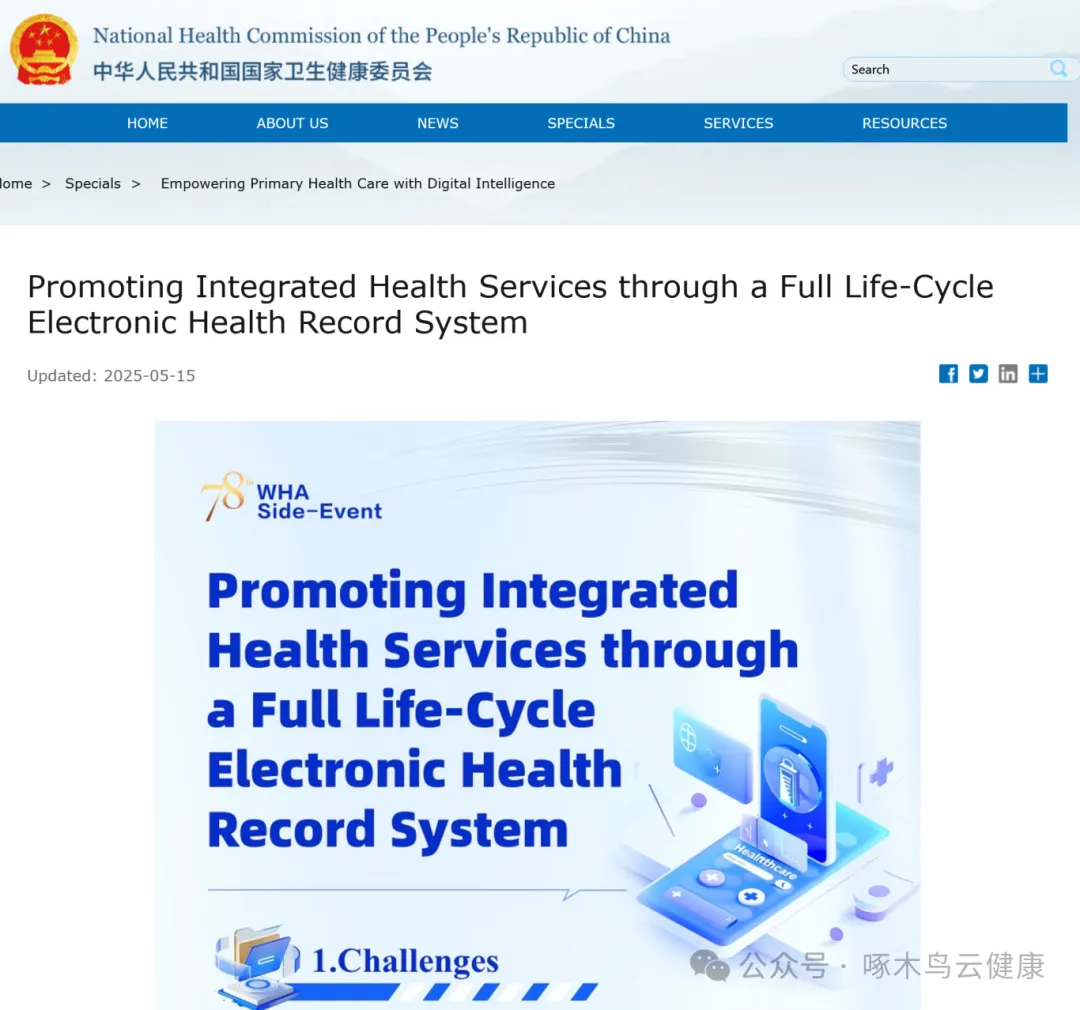
图片来源:第78届世界卫生大会
一、拟解决的问题
居民健康档案是居民各类健康服务过程的规范、科学记录,贯穿整个生命过程,在为居民提供全生命周期健康服务中发挥着基础性载体作用。当前全民健康服务中存在以下突出问题:一是区域间、机构间健康数据资源未能互联互通,居民健康档案未实现全生命周期完整记录。二是居民健康档案未全面向个人开放,不能满足居民查询本人的全量健康信息的需求,致使居民无法参与自我健康管理。三是居民健康档案跨机构、跨层级调阅机制未建立,医务人员无法及时了解居民既往史和诊疗记录,影响精准化诊疗服务供给;难以实现检查结果互认,客观上增加了群众重复检查的经济负担。重庆市针对上述问题,有效整合联通全市卫生健康领域信息系统,形成市域统一、居民唯一、记录居民全量健康数据的电子健康档案,实现规范开放、务实运用,赋能全民健康服务。
二、解决方案
(一)改革设计。按照“一人一档一属地”原则,为全市每位居民建立唯一的电子健康档案,档案汇集全市所有医疗卫生机构全量健康与医疗数据,通过居民授权对外开放和务实运用,支撑全民健康管理。
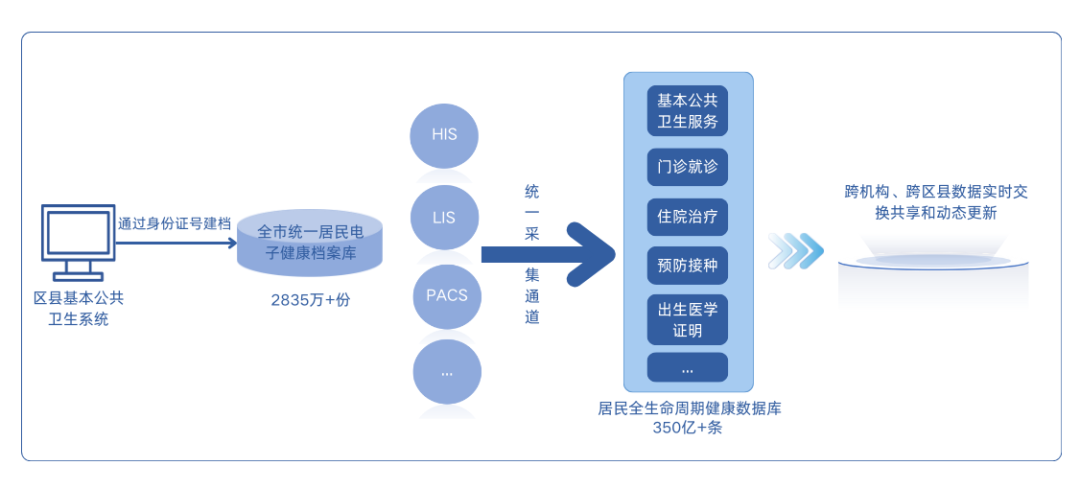
(二)关键技术。以身份证号为唯一识别标识,统一为全市居民建立健康档案2835万份,形成全市统一的居民电子健康档案库。联通各医疗机构HIS、LIS、PACS等系统,通过一个通道统一采集,将居民全生命周期健康数据标准化归集到个人健康档案,共汇聚全市所有公立医院(含部分民营医院)、乡镇卫生院、社区卫生服务机构和疾控机构数据信息350亿条,涵盖了“以人为中心”的基本公共卫生服务、门诊就诊、住院治疗、预防接种、出生医学证明等全量信息,并实现跨机构、跨区县数据实时交换共享和动态更新。
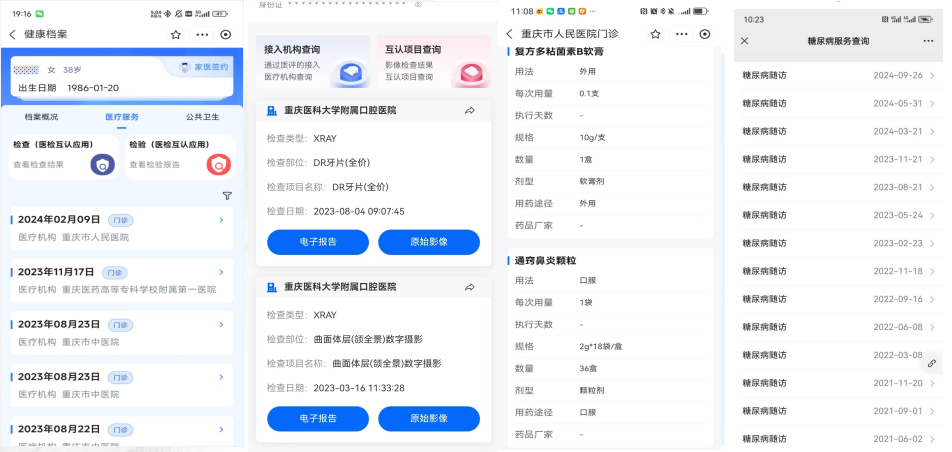
(三)主要做法。一是引导居民自我健康管理。电子健康档案以时间轴形式呈现的全生命周期医疗健康,居民可以通过手机APP随时查询本人的健康状况,引导居民自我健康管理。试点运用AI为居民描绘“健康画像”、家庭医生签约服务分色分级管理服务等。二是开展基本公共卫生服务闭环管理。依托健康档案,对基本公共卫生服务开展“全量记录—智能质控—无感评价—动态反馈”全流程管理。基本公共卫生服务数据全量记录在健康档案中,通过AI引擎对健康档案中数据空项、逻辑矛盾、异常波动等异常数据智能标注和分级预警,并推送至基层医疗卫生机构核实整改,形成闭环质控评价机制。三是数据赋能诊疗。7.7万个医生工作站开通电子健康档案查询功能,经患者授权后,医务人员可调阅居民电子健康档案,查看患者既往病史,助力快速精准诊断,同时,实现“医检互认”,减少患者重复检查。四是智能研判预警疫情。自动抓取各医疗机构医生工作站疑似传染病诊断数据,采集海关出入境和各实验室病原检测、病媒生物等数据,自动产生疫情防控预警信息;通过学校学籍信息、养老院人员信息,智能研判预警聚集性疫情,实现疫情早发现、早处理。
三、取得的成效
一是居民自我健康管理意识明显提升,2024年,居民调阅档案达704.67万人次,居民健康素养水平同比提升了2.53个百分点。二是基本公共卫生服务群众获得感进一步增强,29项基本公共卫生服务全面落实,2024年,全市基本公共卫生服务居民知晓率和满意度同比分别提升了4.19、5.85个百分点。三是群众医疗负担切实减轻,2024年1月以来,全市检查结果互认而减少重复检查97.28万人次,为群众节约就医费用2.14亿元,数据替代CT、MR物理胶片超过80%,降低传统耗材成本超4亿元,切实减轻了群众就医负担和医保支出。四是传染病突发公共卫生事件明显减少,2024年传染病突发公共卫生事件同比下降70%,传染病事件处置效率提升60%。
Empowering Universal Health Services through a Full Life-Cycle Electronic Health Record System
1.Challenges
The resident health record serves as a standardized and scientific documentation of all health service activities across an individual’s life course, providing a fundamental platform for delivering full life-cycle health services. However, fragmented health data across regions and institutions, coupled with residents' limited access to their complete health information, has hindered the continuity, precision, and effectiveness of health services, as well as public participation in self-health management. In response, Chongqing Municipality has successfully integrated and interconnected information systems across the entire healthcare sector, establishing a unified, city-wide electronic health record (EHR) system. Each resident is assigned a unique, comprehensive health record that captures their full health data history, thereby promoting standardized openness, pragmatic application, and empowering universal health services.
2.Proposed Solution
(1) Policy Framework.
The reform was designed according to the principle of "one record per person," ensuring that every resident in the city possesses a unique electronic health record. These records aggregate comprehensive health and medical data from all healthcare institutions citywide, and are accessible externally through resident authorization to support comprehensive health management initiatives.
The system employs national identification numbers as the sole identifier, creating 28.35 million unified EHRs across the municipality. Data from hospital information systems (HIS), laboratory information systems (LIS), and picture archiving and communication systems (PACS) across medical institutions are collected through a standardized channel, and residents’ life-cycle health data are integrated into their personal health records. To date, the system has aggregated over 35 billion data entries from all public hospitals (and some private hospitals), township health centers, community health service centers, and disease control institutions. The data encompass person-centered services such as basic public health services, outpatient visits, inpatient treatments, immunizations, and birth certificates, achieving real-time, cross-institutional and cross-district data exchange and dynamic updating.
(2) Strategies.
Key implementation measures have focused on three areas. First, empowering residents in self-health management: the EHR presents a time-axis view of health and medical information, allowing residents to conveniently access and manage their health status via a mobile app. Pilot applications of artificial intelligence have been launched to create individual “health portraits” and to implement color-coded family doctor service management. Second, closing the loop on basic public health service management: all basic public health data are recorded in the EHR system. AI engines are deployed to intelligently flag missing items, logical inconsistencies, and abnormal fluctuations within the data, generating tiered alerts that are pushed to primary healthcare institutions for verification and correction. Third, enabling data-driven clinical care: 77,000 physician workstations have been connected to the EHR query function, allowing authorized healthcare providers to retrieve patients' historical health records to facilitate faster and more accurate diagnoses while reducing redundant testing.
3.Outcomes and Impact
The initiative has yielded notable achievements. First, residents’ awareness and engagement in self-health management have significantly improved, with over 7 million resident inquiries into personal health records in 2024, and an increase of 2.53 percentage points in the city’s health literacy rate. Second, public satisfaction with basic health services has further increased: by 2024, resident awareness and satisfaction rates regarding basic public health services rose by 4.19 and 5.85 percentage points, respectively. Third, the financial burden of healthcare on residents has been substantially alleviated: since January 2024, mutual recognition of examination results has avoided redundant tests, saving residents approximately 214 million RMB in medical expenses. Moreover, digital imaging has replaced more than 80% of traditional CT and MRI film usage, reducing consumables costs by over 400 million RMB, thereby significantly easing both out-of-pocket expenditures for residents and pressure on the health insurance system.
声明: 所有注明“来源:医博士”的文字、图片和音视频资料,版权均属于医博士所有,转载须注明“来源:医博士”;所有转载文章系出于传递更多信息之目的,且明确注明来源和作者,不希望被转载的媒体或个人可与我们联系,我们将立即进行删除处理。